PUMA Protector: from unboxing to patrol in one hour
The customer planned four weeks to get PUMA Protector up and running on their site, but the robot was operational within an hour of unboxing. Here's the story behind it.
"We have some really challenging terrain for you."
That's how a customer welcomed us when we arrived on site with PUMA Protector, and they meant it. The robot had to patrol day and night, through tall vegetation, up steep slopes and across mud and pools of water. In some places, the route ran along steep banks that dropped straight into the water. Some parts of the route also ran under roof overhangs and tree canopy, where satellite signals don't always reach. And this wasn't a test field: it was a working site, with trucks, cars and people crossing the robot's route throughout the day.
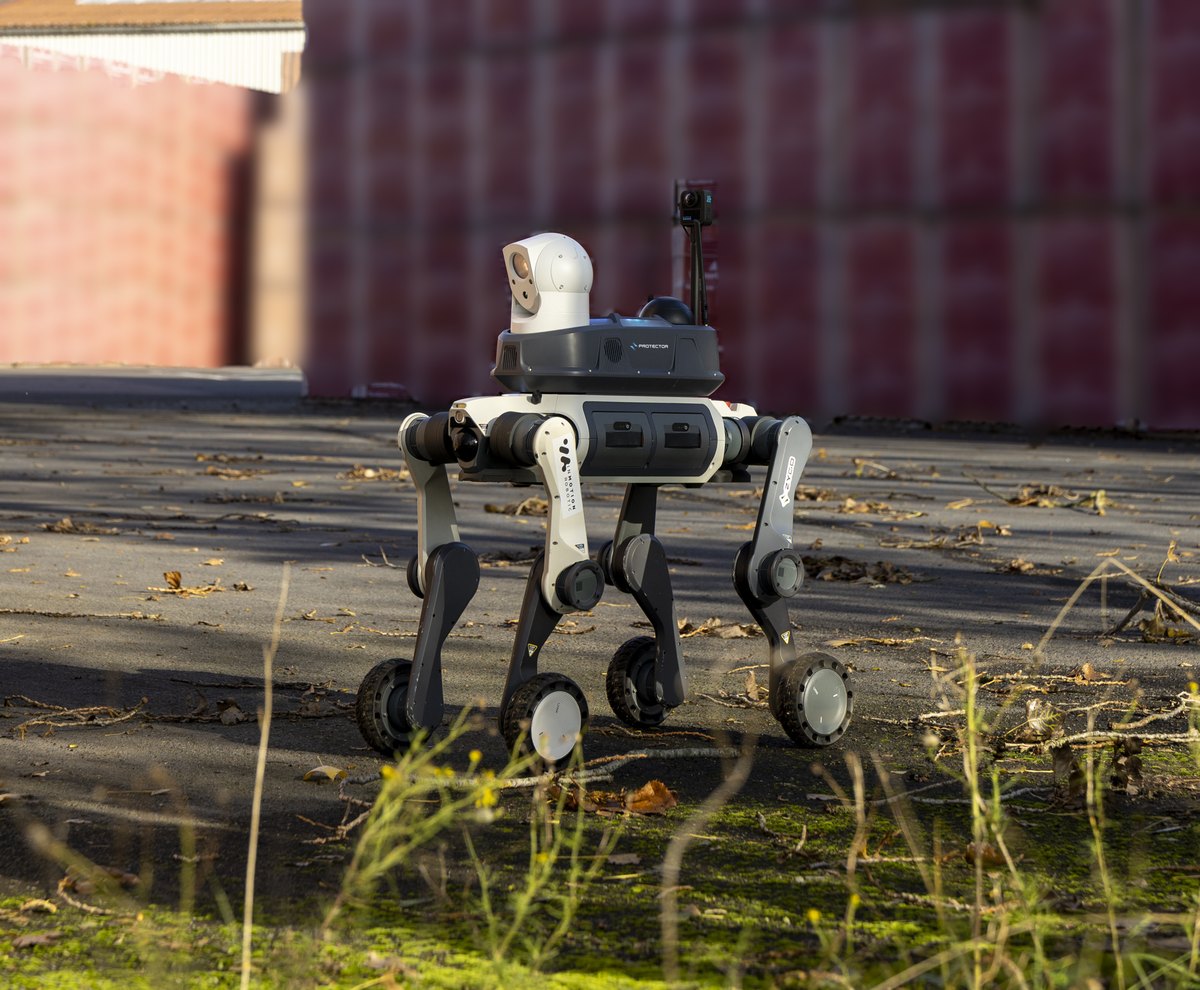
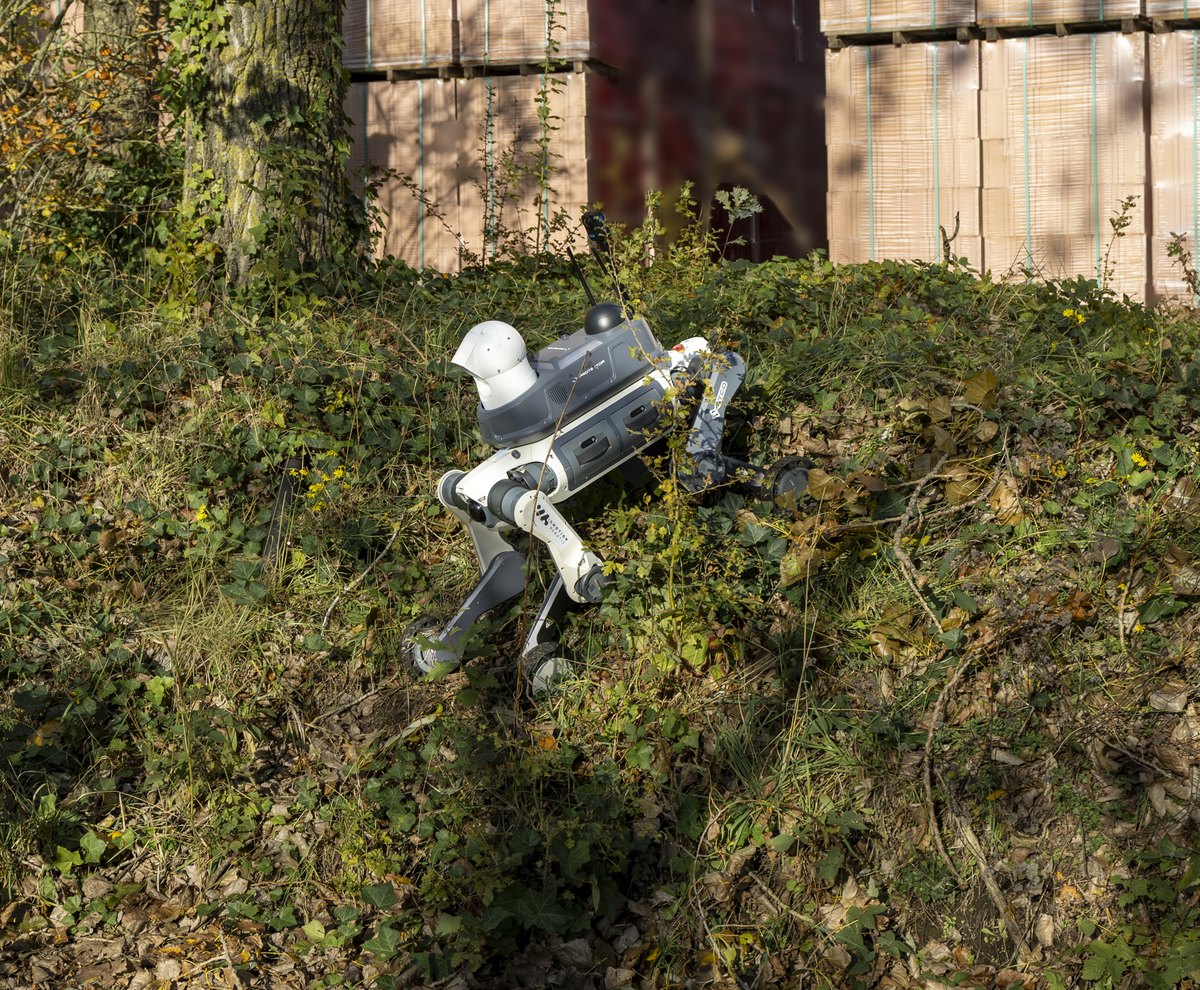
PUMA Protector during field tests. These photos are not from the customer's site.
So given the circumstances and overall low expectations for Physical AI, our customer calculated it would take us four weeks to get PUMA Protector up and running on their site: one week for configuration, another week for development, a third week to get the errors out, and a final week to see the robot in action.
But that's not how we plan to operate. The industry treats weeks of setup as the price of robotics. We don't accept that. If Physical AI is going to scale, robots have to work the moment they're unboxed, so PUMA Protector had to be ready from the start. Everything, from navigation to the web interface, had to work on site without extra development. And it did: about an hour after unboxing, PUMA Protector was out on patrol. By the end of the day, it had covered its route several times without anyone taking manual control.
The first days in numbers
In the first few days of the project, the robot has completed 35 of 36 missions (97.2% success rate). The only 'unsuccessful' mission was aborted by the user so it's hardly a failed mission, but for accuracy's sake we're not counting it as successful either.
During those 35 completed missions, the robot drove for about 20 hours and covered a distance of roughly 45 kilometres. ZYGO Intelligence, the brain that makes sense of everything PUMA Protector sees, also processed over 4,500 captures and turned several of them into alerts for a person to act on.
What an alert looks like
You'll understand that we cannot share all the alerts from this project. Nonetheless, we selected a few examples to give you an idea of what PUMA Protector is capable of. In short, the system detects when something is off and writes a report from what the robot’s cameras see. An alert then gets sent to the web app for a person to decide what it means and what has to happen next. The four examples below range from a missing safety vest to a hole in the perimeter fence.
Swipe through four example alerts, laid out like the PUMA Protector web app. The times are illustrative.
What made this success possible
The success and fast deployment were possible because of choices we made long before we saw this particular site. Here are just a few of the reasons:
- Plug and play. Buyers worry that a robot means a lot of their own time and resources before it does anything, so we kept the customer’s part small. Once the docking station is installed, the robot docks itself, and a short walkthrough of the web interface is enough to get customers started.
- Built for the real world. Real sites aren’t tidy, inside or out. Tall grass, mud and uneven ground, but also halls and covered areas where satellite signals don’t reach: that’s where many robots get stuck, so that’s where we focused long before we met this site. PUMA Protector understands what’s in front of it, so it can tell what it can drive through from what it has to go around.
- Proven before it ships. Every new version of the software has to prove itself in simulation, against the toughest situations we can throw at it, before it reaches a real site. That lets us improve fast without ever putting what already works at risk.
- It understands the job. The customer draws a route, and PUMA Protector works out the rest. The real world rarely matches the plan: the drawn route doesn’t line up with what the robot sees on the ground, a sensor reports something that doesn’t add up, a parked car blocks the path. PUMA Protector builds its own map as it goes, cross-checks what its sensors tell it, and keeps finding its way between the points, rejoining the route as soon as it can.
What comes next
The project keeps running, and we keep improving the product, from navigating tougher terrain to a more intuitive web interface for the people planning the missions and reviewing the alerts. And because PUMA Protector doesn’t need satellites to find its way, it patrols a warehouse or production hall just as easily as a muddy site.